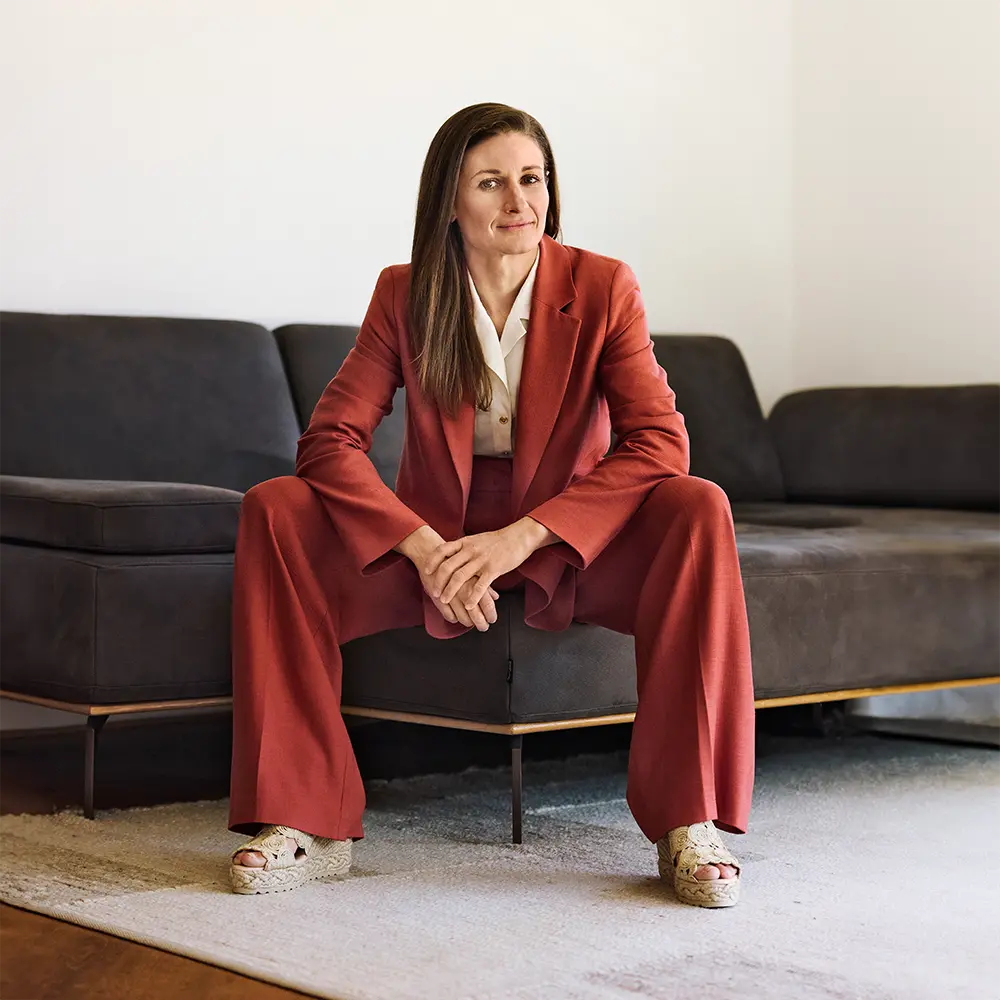
AIMING HIGH
Whether she’s on skis, climbing a rock face or flying a paraglider, she’s “always highly motivated” in the mountains, says Nadine Wallner.
AIMING HIGH
Whether she’s on skis, climbing a rock face or flying a paraglider, she’s “always highly motivated” in the mountains, says Nadine Wallner.
You are a multiple world champion in freeride skiing. Can you remember your first steep slope?
Yes, my father was a mountain guide and took me with him on the Valluga West, a 40-degree steep descent in the Arlberg, when I was six years old. Then, as now, skiing had a playful aspect for me: you let yourself be carried along the untouched slope by the weightlessness of the powdery snow. It’s carefree, easy and great fun.
Your sport is not without its dangers. For example, you skied
the east face of the Matterhorn in 2024. A mistake would have had fatal consequences.
That’s right. The risk of falling is similar to free solo climbing, which is climbing without safety equipment. Whenever I move the ski in a new direction, I have to briefly position it in the fall line. That’s the riskiest moment. So it’s important for everything to fit together: the preparation, the conditions and my decision. If I doubt myself, I don’t ski down runs like that.
In what situations would you draw the line?
There’s always a certain risk. But the more red flags there are – for example, the danger of avalanches or a poor snow profile – the more courage is needed to turn back. On the days you say no, you also grow. That’s important in the mountains.
In summer, you go climbing and paragliding. Why do you seek challenges like these?
see it more as athletic development and as something that matches my abilities. Many people only see the success, not the journey and the training behind it. And it’s just something I really enjoy.
What is the biggest challenge in these types of sports?
Enjoying the thrill while remaining careful.
You’ve also had serious falls, including an open tibia and fibula fracture after a 250-metre tumble in Alaska. How do you deal
with such setbacks?
I try to remain emotionally flexible. One door closes and another opens. After the fracture, I couldn’t ski for three years. I started climbing, and at the beginning I often tore small ligaments in my fingers. So I changed my expectations
of climbing and trained differently. I didn’t feel sorry for
myself. I always stuck to my goal of being able to ski again. And I got there in the end.
What do mountain sports mean to you? Why should people do them?
They make you happy. The different types of activities –
like skiing or climbing, combined with ever-changing nature – are exciting. It’s fulfilling to become more aware
of how you move over the years. That gives me a huge
amount of energy and a great feeling of freedom. You are in the here and now.
You are a multiple world champion in freeride skiing. Can you remember your first steep slope?
Yes, my father was a mountain guide and took me with him on the Valluga West, a 40-degree steep descent in the Arlberg, when I was six years old. Then, as now, skiing had a playful aspect for me: you let yourself be carried along the untouched slope by the weightlessness of the powdery snow. It’s carefree, easy and great fun.
Your sport is not without its dangers. For example, you skied
the east face of the Matterhorn in 2024. A mistake would have had fatal consequences.
That’s right. The risk of falling is similar to free solo climbing, which is climbing without safety equipment. Whenever I move the ski in a new direction, I have to briefly position it in the fall line. That’s the riskiest moment. So it’s important for everything to fit together: the preparation, the conditions and my decision. If I doubt myself, I don’t ski down runs like that.
In what situations would you draw the line?
There’s always a certain risk. But the more red flags there are – for example, the danger of avalanches or a poor snow profile – the more courage is needed to turn back. On the days you say no, you also grow. That’s important in the mountains.
In summer, you go climbing and paragliding. Why do you seek challenges like these?
see it more as athletic development and as something that matches my abilities. Many people only see the success, not the journey and the training behind it. And it’s just something I really enjoy.
What is the biggest challenge in these types of sports?
Enjoying the thrill while remaining careful.
You’ve also had serious falls, including an open tibia and fibula fracture after a 250-metre tumble in Alaska. How do you deal
with such setbacks?
I try to remain emotionally flexible. One door closes and another opens. After the fracture, I couldn’t ski for three years. I started climbing, and at the beginning I often tore small ligaments in my fingers. So I changed my expectations
of climbing and trained differently. I didn’t feel sorry for
myself. I always stuck to my goal of being able to ski again. And I got there in the end.
What do mountain sports mean to you? Why should people do them?
They make you happy. The different types of activities –
like skiing or climbing, combined with ever-changing nature – are exciting. It’s fulfilling to become more aware
of how you move over the years. That gives me a huge
amount of energy and a great feeling of freedom. You are in the here and now.
CREDITS
Photography: Joël Hunn, Production: Vanessa Zeeh, Hair & Make-up: Léa Stalder
Photography: Joël Hunn, Production: Vanessa Zeeh, Hair & Make-up: Léa Stalder